
Does Nofollow Links Help SEO
Table of Contents
Are nofollow links good for SEO? This question has sparked debates among SEOs for nearly two decades. For years, many dismissed nofollow links as worthless for rankings. In 2026, that view is outdated and incomplete.
The short answer: Yes, nofollow links help SEO but not primarily by passing traditional link equity or PageRank the way dofollow links do. They deliver meaningful value through referral traffic, brand signals a natural-looking backlink profile, content discovery and even subtle ranking hints in certain cases. Google’s shift to treating nofollow as a “hint” rather than a hard directive changed the game. Ignoring high quality nofollow opportunities means leaving real SEO benefits on the table.
This guide explains exactly how nofollow links help SEO, what Google does with them today the indirect benefits that matter most, realistic expectations and practical strategies you can use.
What Are Nofollow Links?
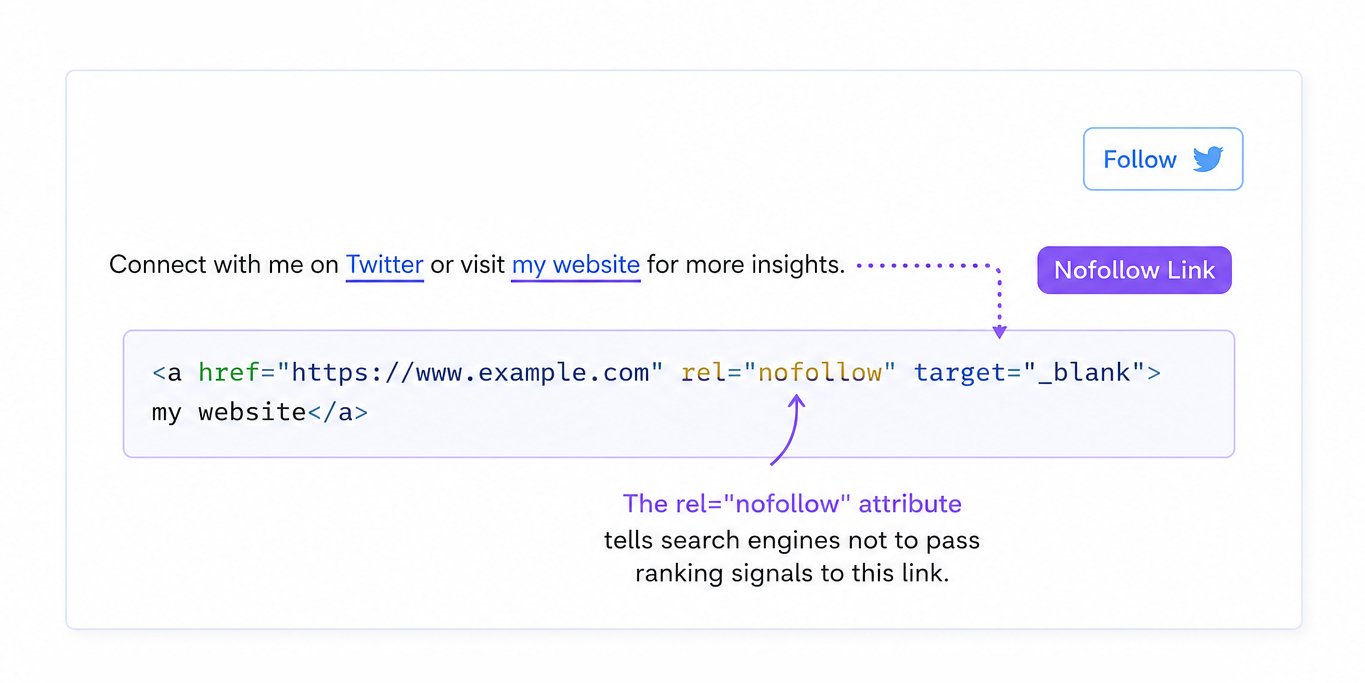
A nofollow link is a standard hyperlink with an extra HTML attribute that signals to search engines how the link should be treated.
Here’s the basic code:

The rel=”nofollow” attribute tells search engines that the linking site does not necessarily endorse the destination page or want to pass ranking credit in the normal way.
Google also supports two more specific attributes introduced in 2019:
- rel=”sponsored” – for paid, affiliate, or compensated links
- rel=”ugc” – for user-generated content such as comments, forum posts, and guest contributions
All three attributes (nofollow, sponsored, and ugc) are treated similarly by Google. “Dofollow” is not an actual HTML attribute — it simply means a normal link with no restrictive rel value. These links can pass ranking signals by default.
Nofollow was introduced by Google in 2005 mainly to combat comment spam and paid link schemes. From a user’s perspective, nofollow and dofollow links look and function identically. The difference exists only for search engines.
How Google Treats Nofollow Links Today
Understanding Google’s current policy is essential.
From 2005 until late 2019, nofollow acted as a strict directive. Google generally ignored these links for ranking purposes and did not follow them for crawling in the same way.
That changed. On September 10, 2019, Google announced that nofollow, along with the new sponsored and ugc attributes, would be treated as hints for ranking. On March 1, 2020, the hint treatment expanded to crawling and indexing as well.
A “hint” means Google reserves the right to decide whether to consider the link for ranking, crawling, or indexing based on context, quality, relevance, and other signals. Google may still crawl a nofollow link, discover the page, and in some cases factor it into ranking evaluations, especially when the source is highly trusted and the link appears editorial in nature.
In practice, most nofollow links still do not pass significant PageRank or anchor-text value the way strong dofollow links do. Google has stated that it generally does not count them for ranking purposes in the traditional sense. However, the guarantee of complete exclusion is gone. High authority, contextually relevant nofollow links can occasionally influence outcomes.
This policy remains in effect in 2026.
Do Nofollow Links Help SEO? The Direct Answer
Yes, nofollow links help SEO, but the help is mostly indirect.
Direct ranking impact through traditional link equity is limited and unreliable. You cannot build a competitive ranking strategy on nofollow links alone. Sites that rank well in competitive niches typically have a healthy mix of both dofollow and nofollow backlinks, with dofollow links from relevant, authoritative sources carrying the primary ranking weight.
That said, industry surveys and practitioner observations show that a large majority of experienced SEOs believe nofollow links influence rankings to some degree, through hints, secondary signals, or overall profile quality. Controlled tests (such as those placing nofollow links on high visibility forums) have occasionally shown measurable ranking or indexing effects, though results vary and are not guaranteed.
The bigger truth is this: quality and context matter far more than the attribute alone. A nofollow link from a major news outlet or trusted industry resource often delivers more real-world value than a low quality dofollow link from an irrelevant site.
How Nofollow Links Help SEO: The Real Benefits
Here is where nofollow links earn their keep.
1. Referral Traffic Nofollow links still send real human visitors. A link on a high traffic site, whether Wikipedia, a major publication, Reddit, or a popular forum, can drive qualified traffic. Those visitors can convert, engage with your content, share it further or eventually create dofollow links of their own. Referral traffic also generates behavioral signals that search engines notice.
2. Brand Visibility and Awareness Being mentioned and linked on authoritative platforms builds brand recognition. Increased branded searches are a strong positive signal. Even without direct equity transfer, consistent brand mentions help establish entity recognition across the web.
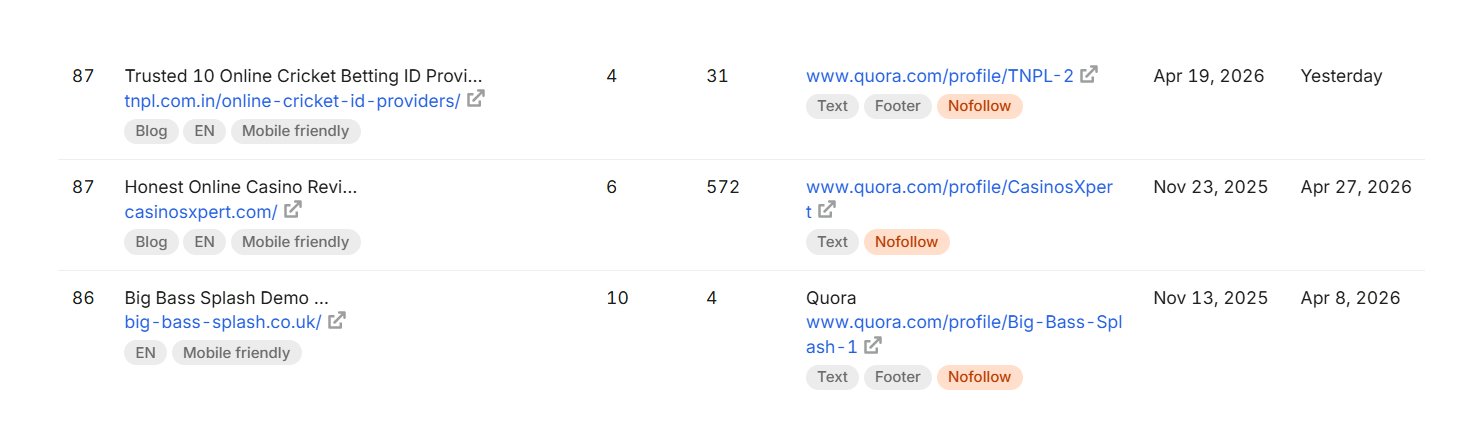
3. Natural Backlink Profile Diversity A completely dofollow backlink profile can look unnatural or manipulative to algorithms designed to detect link schemes. Real websites earn a mix of link types. Industry observations suggest healthy profiles often contain roughly 20 to 40% nofollow links (exact ratios vary by niche). Nofollow links from platforms that automatically apply the attribute (Wikipedia, most social networks, many forums) help create this natural diversity and reduce risk.
4. Content Discovery and Indexing Because nofollow is only a hint, Google can still use these links to discover and crawl pages. This is particularly useful for newer or less-linked content. Multiple practitioner reports and tests show that pages can get indexed or see visibility improvements after receiving high-visibility nofollow links.
5. Brand and Entity Signals for AI Search Modern search includes AI Overviews, ChatGPT, Perplexity, Gemini and similar systems. Studies (including large-scale analyses of domain visibility) have found that nofollow links correlate almost as strongly with AI search visibility as dofollow links. These systems often treat mentions and citations more holistically than traditional link graph PageRank.
6. Pathway to Stronger Links Exposure through nofollow placements frequently leads to secondary benefits. Journalists, bloggers or industry peers who discover your content via a nofollow mention may later link to you editorially with a dofollow link.
Collectively, these benefits mean high quality nofollow links support SEO even when they do not move the ranking needle directly.
Are Nofollow Links Good for SEO? Pros, Cons, and Realistic Expectations
Pros
1. Drive referral traffic and potential conversions
2. Strengthen brand signals and entity recognition
3. Contribute to a natural, penalty resistant link profile
4. Aid discovery and indexing
5. Support visibility in both traditional and AI powered search
6. Often easier or lower-risk to earn than pure editorial dofollow links
Cons
1. Do not reliably pass significant PageRank or anchor-text value
2. Cannot serve as the primary driver of competitive rankings
3. Low quality or spammy nofollow links add little to no value
4. Over-reliance on them leaves ranking potential untapped
Realistic expectation: Treat nofollow links as valuable supporting assets within a broader link building and brand strategy. Prioritize relevance, authority of the source and audience quality over the attribute itself. A strong nofollow link from a trusted site in your niche is almost always worth more than a weak dofollow link from an irrelevant domain.
| Factor | Dofollow (default) | Nofollow (or sponsored/ugc) |
|---|---|---|
| Passes ranking equity | Yes (when relevant & trusted) | Generally no (hint only) |
| Direct ranking impact | Strong potential | Limited / occasional |
| Referral traffic | Yes | Yes |
| Brand visibility | Yes | Yes |
| Natural profile contribution | Yes | Yes (important for diversity) |
| AI search / entity signals | Yes | Yes (often comparable) |
| Typical sources | Editorial mentions, guest posts | Wikipedia, forums, social, paid, UGC |
| Risk if misused | Higher (if manipulative) | Lower when properly attributed |
Dofollow links remain the core ranking drivers. Nofollow links provide supporting value and risk mitigation.
Practical Strategy: How to Use and Earn Nofollow Links Effectively
Should you actively pursue nofollow links? Yes, as part of a balanced approach. Do not chase them exclusively, but do not reject quality opportunities either.
High value sources worth targeting
- Authoritative news and industry publications (even when they nofollow)
- Wikipedia and similar reference sites
- Relevant forums, Reddit communities, and Q&A platforms
- Social profiles and platforms that apply nofollow by default
- High quality directories or resource pages
- Guest contributions or mentions that come with nofollow
Best practices for your own site (outbound links)
- Use rel=“sponsored” for paid or affiliate links
- Use rel=“ugc” for user-generated content
- Use rel=“nofollow” when you do not fully trust or want to endorse a destination
- Link naturally to valuable external resources for users, do not nofollow every outbound link in an attempt to “preserve PageRank” (this old tactic no longer works effectively)
Common mistakes to avoid
- Dismissing all nofollow opportunities as worthless
- Building an all dofollow profile that looks artificial
- Buying low quality nofollow packages with no traffic or relevance
- Applying nofollow to important internal navigation links
- Focusing only on the attribute instead of source quality and relevance
How to measure impact Track referral traffic from known nofollow sources, changes in branded search volume, secondary dofollow links that appear after exposure, indexing speed of new pages and overall backlink profile health in tools like Google Search Console, Ahrefs, Semrush, or similar.
Common Myths About Nofollow Links (Debunked)
Myth: Nofollow links are completely ignored and worthless. False. They drive traffic, brand signals, and profile diversity. Google treats them as hints and can still use them.
Myth: You only need dofollow links. False. An all-dofollow profile can appear unnatural. Healthy sites earn both.
Myth: Too many nofollow links hurt rankings. False. Natural profiles contain a substantial percentage of nofollow links. Quality and relevance matter more than the ratio.
Myth: Nofollow prevents a page from being indexed. False. Google can still discover and index pages via nofollow links (or other means).
Myth: Internal nofollow still works for PageRank sculpting. False. This tactic has been ineffective for many years. Focus on clear site architecture and quality content instead.
Do nofollow links pass PageRank or link equity?
Generally no. Google treats them as hints and usually does not pass ranking credit the way it does with dofollow links. Occasional exceptions may exist for high quality sources, but this is not reliable.
Can a site rank using only nofollow links?
Unlikely for competitive terms. You need a foundation of quality dofollow links. Nofollow alone is insufficient for strong rankings.
Do nofollow links from high-authority sites matter more?
Yes. Source quality, relevance, and traffic potential matter far more than the attribute. A nofollow from a major publication often outperforms a low quality dofollow.
Should I ask websites to change nofollow to dofollow?
Sometimes, if the relationship is editorial and the request is reasonable. Many platforms apply nofollow by default and will not change it. Focus energy on earning new quality links instead of converting every existing one.
How do nofollow links affect AI search?
They contribute meaningfully. Large scale analyses show nofollow links correlate nearly as strongly with AI visibility as dofollow links. Mentions and citations help entity recognition across generative systems.
What is a good dofollow to nofollow ratio?
There is no official perfect ratio. Many strong sites fall in the range of roughly 60 to 80% dofollow and 20 to 40% nofollow, but this varies widely by niche and should not be forced artificially.
Do social media and Wikipedia links help SEO?
Yes, primarily through traffic, brand exposure, discovery and natural profile signals. Most are nofollow by design, yet they remain valuable.
